

Introduction

Picture this. A small company assumes its data is “not interesting” to attackers. Then one morning the team wakes up to locked systems, stolen customer records, and a bill in the millions. Recent reports put the average cost of a data breach at more than 4.5 million dollars, enough to sink many smaller businesses—a scenario examined in detail in the Enterprise Security Incident Analysis of major corporate breaches.
Most of these incidents could be reduced or avoided with a regular security audit. Think of it as a full health check for systems, data, and people. Instead of guessing whether defenses are strong enough, we test them against clear standards and real risks, then fix what we find.
Many owners still believe audits are only for banks, hospitals, or huge tech companies. In 2025 that view is risky. Attackers use automation and AI to scan for weak targets, and small organizations are often the easiest to hit. A structured security audit is no longer a “nice to have” for big players; it is basic risk management for anyone who stores or processes important data.
In this guide we walk through what a security audit is, how it differs from scans and penetration tests, the six core types of audits, how to choose between internal and external auditors, and a simple five step process to run your own audit. We also touch on how AI and automation affect audits, and where resources from VibeAutomateAI fit into that picture. By the end, you will have a clear, practical roadmap for planning and carrying out a security audit that leads to real security improvements instead of just creating a stack of paperwork.
Key Takeaways
- Learn what a security audit is and how it differs from simple scans, plus why it matters even for smaller teams.
- Understand six core audit types and when each one fits best, so you can match them to your own risk and compliance needs.
- Compare internal and external audits to build a mix that balances cost, depth, and trust with clients and regulators.
- Follow a clear five step process to plan, run, and act on a security audit, turning findings into real improvements instead of shelfware.
- See how AI and automation shape audits and how guides from VibeAutomateAI help turn complex standards into step by step actions.
What Is a Security Audit Understanding the Fundamentals

A security audit is a structured review of how well an organization protects its systems and data. The National Institute of Standards and Technology (NIST) calls it an independent review and examination of records and activities to check whether controls are adequate, policies are followed, and changes are needed. In everyday language, we take a hard look at how we protect information and where attackers could slip through.
A proper audit reaches far beyond checking firewalls. It covers technical pieces such as servers, networks, and cloud services, but also written policies, day to day procedures, and human behavior. That means looking at password rules, access approvals, backup routines, incident response plans, employee training, and even physical security such as door access and visitor handling.
It also helps to separate a full security audit from related activities:
- A vulnerability scan uses automated tools to look for known weaknesses such as missing patches.
- A penetration test goes further and tries to exploit those weaknesses like an attacker would.
Both are useful, but they focus on specific systems. A security audit is wider. It checks whether the whole security program is designed well, documented clearly, and working in practice.
During an audit we pay close attention to how sensitive information moves and who can touch it, often examining Audit Logs to track access patterns and system activities across the organization. We ask how we assign and remove access, how quickly we patch systems, how we monitor for threats, and how we respond when something goes wrong. We compare current controls to internal policies and to external standards such as ISO 27001 or NIST guidance.
“Security controls are effective only if they are implemented correctly, operating as intended, and producing the desired outcome.” — NIST SP 800-53
The main benefit is that this work happens before an incident, not after. By spotting weak points early, we can fix them on our own terms instead of during a crisis when every hour of downtime is costly. Done on a regular schedule, security audits turn guesswork about risk into facts that leaders can act on.
Why Every Business Needs Regular Security Audits
Cyberattacks do not only target global brands. Studies often show that a large share of incidents hit small and mid sized companies because attackers know they may have weaker defenses and fewer staff. The impact goes beyond direct money loss. Downtime stops sales, regulators may add fines, and trust with customers can be damaged for years.
Regular security audits help by:
- Finding technical and process weaknesses such as unpatched systems, open ports, weak access controls, and missing backups.
- Supporting regulatory compliance for frameworks such as PCI DSS, HIPAA, and GDPR.
- Demonstrating to clients, partners, and investors that data protection is tested, not just stated on paper.
- Guiding smart spending, so limited budgets go toward the risks that matter most.
“Security is not a product, but a process.” — Bruce Schneier
Legal and contract requirements also shape how often we need an audit. Industry rules, company size, what kind of data we hold, and local laws all play a part. Government contracts or large enterprise clients may even require proof of recent audits. Even in sectors with no formal rules, regular security audits are now a basic part of risk management, much like insurance or financial controls.
The Six Core Types of Security Audits You Need to Know
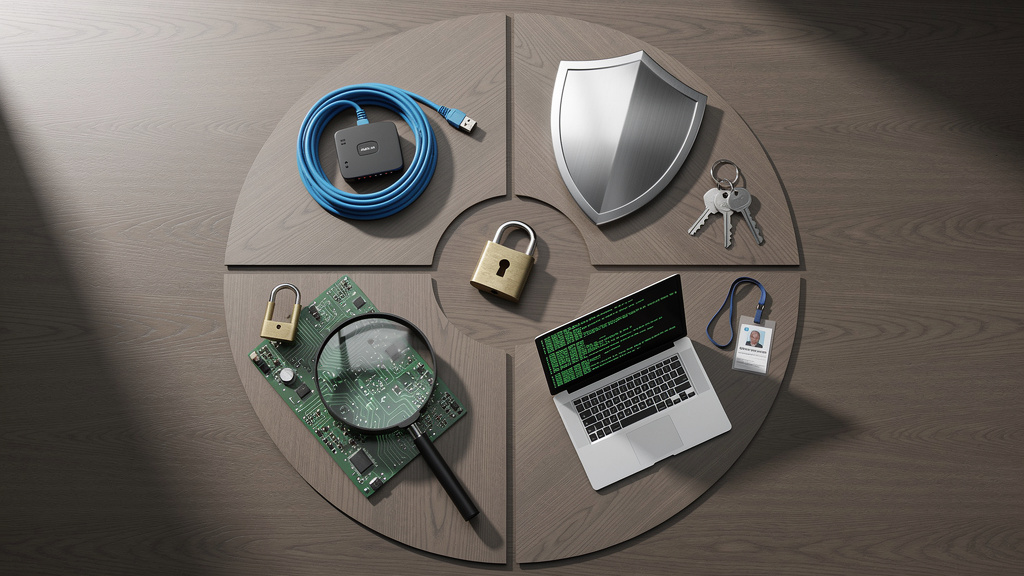
Not every security audit looks the same, as demonstrated by the Top 10 Cybersecurity Audit companies that specialize in different audit methodologies and compliance frameworks. Different audit types focus on different questions such as “Are we compliant” or “Where is our highest risk.” Most mature programs use several types over time to get both a broad view and deep checks in high risk areas.
Compliance Audits
A compliance audit checks whether we meet specific rules and standards that apply to our industry or contracts. Common examples include PCI DSS for payment cards, HIPAA for health data, SOX for public companies, and GDPR for privacy in Europe. Auditors follow detailed checklists from these frameworks, then confirm that required controls exist and are documented.
The main goal is to show regulators, clients, and partners that we follow the rules and reduce the chance of fines, legal action, or lost certifications. While these audits may not find every weakness, research on The Effectiveness of Internal cybersecurity audits shows they are key for staying on the right side of the law and improving overall security posture.
Risk Assessment Audits
A risk assessment audit starts with the business rather than a rulebook. We identify our most important assets such as customer databases, key applications, and sensitive designs. Then we think through what could harm them, from ransomware to insider misuse or cloud misconfigurations.
The result is a clear picture of risk levels across the organization. Leaders can compare those risks against the cost of controls and decide where to focus time and money. This type of audit connects technical findings to real business impact instead of treating every issue as equal.
Vulnerability Assessments
A vulnerability assessment is a focused security review on technical weaknesses in systems, networks, and applications. We use automated scanners and manual checks to look for missing patches, exposed services, weak encryption, default accounts, and other common problems.
The output is a list of vulnerabilities, usually scored by severity, along with where they sit and how they might be used in an attack. The next step is to prioritize based on how important the affected system is and how easy the issue is to exploit. Regular vulnerability assessments form the base of a strong patch and configuration management program.
Penetration Testing Pen Testing
Penetration testing takes things a step further by trying to exploit real weaknesses rather than just listing them. Ethical hackers act like attackers and attempt to break into systems, move between them, and reach sensitive data. This shows how far an intruder could get and which chains of issues matter most.
Common approaches include:
- White box testing: Testers get full system knowledge, which is fast and good for code level or design flaws.
- Black box testing: Testers start with no inside information, which feels more realistic but takes longer and costs more.
- Grey box testing: A middle ground that often gives the best mix of depth and effort.
Pen tests are especially helpful for organizations that handle highly sensitive data or need to prove control strength to demanding clients.
Configuration and IT Infrastructure Audits
Configuration and IT infrastructure audits look at how systems are set up rather than at software code itself. We compare server, network, database, and cloud settings against security best practices and standards. That includes network segmentation, firewall rules, logging settings, default accounts, and hardening guides from vendors.
The aim is to spot misconfigurations before an attacker does, such as overly open ports or weak admin access. When people say “IT security audit” they often mean this kind of work. A broader information security audit will also consider governance, policies, and training, but configuration reviews stay closer to the technical layer and provide very specific hardening steps.
Social Engineering Audits
Social engineering audits shift the focus from machines to people. Specialists send fake phishing emails, make scripted phone calls, or run in person tricks such as leaving infected USB drives. The goal is to see how staff respond when someone pressures them into unsafe actions.
Results highlight where awareness training is strong and where it needs work. Many real world breaches start with a single click on a bad link, so understanding this human side through regular social engineering audits is just as important as scanning servers.
“People, process, and technology are all part of security. Ignore any one of them and you create a gap.” — Common industry maxim
Internal vs. External Audits Choosing Your Approach

Once we know the main types of security audits, the next question is who should perform them. Some reviews can be handled by our own team. Others call for an outside view. The best programs mix both, using each at the right time for the right purpose.
Internal Audits Using Institutional Knowledge
Internal audits are run by people inside the organization, such as the IT security team or an internal audit function. These teams know our systems, data flows, and day to day habits very well, which makes it easier to move fast and dig into tricky issues.
Internal audits are also less expensive because we are using staff we already pay, not bringing in a consulting firm. They are ideal for checking ongoing policy compliance, testing recent changes, and preparing for larger external reviews. For example, we might run internal mini audits each quarter on topics like access control or backups.
One limit is that insiders can develop blind spots or feel pressure to avoid hard questions, a challenge documented in studies on the Effectiveness of cybersecurity audit processes and organizational independence. That is why internal work should be backed up by periodic external checks.
External Audits The Power of Objectivity
External audits are performed by independent third party professionals who have no direct stake in how the findings look. That distance is a major strength because it reduces the chance that awkward issues get downplayed.
External firms often bring deep expertise in specific standards such as SOC 2, ISO 27001, or PCI DSS, as well as experience from many other clients. Their reports carry strong weight with customers, regulators, and boards who want proof that security is more than an internal claim.
In some cases a business partner will perform a second party audit to check that we meet contract terms. In other cases a fully independent third party firm is hired for formal certification or regulatory needs. While external audits cost more, they provide a level of trust and specialist knowledge that internal teams usually cannot match alone.
Building a Hybrid Strategy for Comprehensive Security
In practice, the best approach is a hybrid one that uses both internal and external security audits in a planned way. For example:
- Internal audits or control checks every quarter, focusing on high risk areas like access management, backups, and change control.
- An external review once a year, or every two years, for a deeper and broader check.
Internal audits help catch issues early, keep procedures fresh, and avoid surprises. They also help us prepare for external reviews so the outside team spends less time on basic gaps and more time on harder questions. This layered model balances cost with depth and creates a pattern of steady improvement backed by independent review.
How to Conduct a Security Audit Your Step by Step Implementation Guide

Running a security audit can feel overwhelming the first time, especially without a large security team. Breaking it into clear steps makes the work manageable and repeatable. The five step flow below works whether we perform the audit ourselves or hire outside help, and it lines up well with guidance from NIST and other standards bodies.
Step 1 Planning and Defining Scope
First, decide what you are auditing and why. Set clear objectives, such as passing a PCI DSS review, understanding top risks, or preparing for ISO 27001. Then list the systems, applications, networks, and locations that fall into scope, including cloud services and remote devices.
Look for “shadow IT” — tools or services teams use without formal approval. At this stage set timelines, assign roles, and flag which systems are most critical so they receive priority attention.
Step 2 Information Gathering and Documentation Review
Next, learn how things currently work in practice. Meet with IT, compliance, and key business owners to walk through daily processes and data flows. Collect and read documents such as security policies, network diagrams, access control lists, incident response plans, and backup procedures.
The goal is to see whether what is written matches what people actually do. Gaps between paper and reality are often high risk, because leaders may think a control is in place when it is not. This phase sets the context for technical testing and helps auditors avoid missing important systems.
Step 3 Technical Assessment and Active Testing
In the third step, test the technical controls that protect systems and data. Run vulnerability scans to look for missing patches, unsafe services, and weak encryption settings. Test network defenses such as firewalls and intrusion detection, and review how endpoints are protected with antivirus or endpoint detection tools.
Also check access controls, focusing on role based access, multi factor authentication, and removal of inactive accounts. For higher risk areas, add penetration testing to see how far an attacker could get. All of this work produces raw data that you later group, score, and tie back to business impact.
Step 4 Analysis Reporting and Prioritization
Once testing is done, move into analysis. Look for patterns in the issues found, such as repeated misconfigurations or missing processes. Think through how each finding could be used in a real attack and how it would hurt the business.
The main output is a report that speaks both to technical staff and to non technical leaders. It should include:
- An executive summary in plain language.
- A list of findings sorted by severity.
- A view of any compliance gaps.
- Clear, practical recommendations.
Whenever possible, include rough effort and cost estimates so leaders can plan and budget fixes.
Step 5 Remediation and Continuous Improvement
The value of a security audit comes from what we do after the report, not from the report alone. Create a remediation plan that assigns each finding to an owner, sets a target date, and outlines the fix. Critical issues such as exposed admin interfaces or missing backups need fast action. Lower risk items can be grouped into planned improvement projects.
Once fixes are in place, follow up checks confirm they work as expected. Over time, feed lessons from each audit back into policies, designs, and training. At VibeAutomateAI the focus is on this practical loop, offering guides and checklists that help teams move from audit findings to real, measurable security gains.
Conclusion
Security audits are not just about passing a test or ticking a box. They are one of the clearest ways to see how well we protect the data and systems that keep the business running. By looking at policies, people, and technology together, a security audit turns vague worry into concrete facts and action items.
We have looked at what a security audit is, why regular audits matter for organizations of any size, and the six main audit types that cover compliance, risk, technical settings, and human behavior. We also covered how internal and external auditors play different roles, and how a simple five step process can guide an audit from planning through remediation. Trends such as continuous validation, cloud focused reviews, and AI based analysis will only make structured audits more important.
The next step does not need to be huge. Starting with a basic risk assessment or a focused internal review of one area, such as access control, can already reduce exposure. From there we can build toward fuller audits and stronger practices. VibeAutomateAI exists to make that path clearer, with practical guides that connect security theory to daily work. If we keep listening to what audits reveal and keep improving, we put our organizations in a far better position to face whatever threats come next.
FAQs
Before we wrap up, it helps to address some of the questions we hear most often when teams start planning their first security audit. Clear answers make it easier to set expectations with leaders, staff, and partners.
Question 1 How Often Should My Organization Conduct Security Audits
There is no single schedule that fits everyone, but there are helpful patterns. Many organizations aim for a full external security audit once a year, supported by smaller internal audits or control checks each quarter. Highly regulated areas such as payment processing may require annual reviews under standards like PCI DSS.
It is also wise to trigger an extra audit after major changes such as a cloud migration, a merger, or deployment of a core new system. Between these formal efforts, continuous monitoring tools help keep watch so problems do not pile up.
Question 2 What Is The Difference Between A Security Audit And A Penetration Test
A security audit is a wide review of the whole security program. It looks at policies, processes, technical controls, training, and often physical security as well. A penetration test is narrower and more aggressive. Testers try to break into specific systems and move toward sensitive data, using the same tricks real attackers use.
Audits tend to show where controls are weak or missing, while pen tests show how far an attacker could really get. A strong security plan uses both so we gain both breadth and depth.
Question 3 How Much Does A Security Audit Typically Cost
Costs can vary a lot based on size and scope. For a small business, an internal security audit may cost little in cash but will take staff time and focus. A targeted external audit for a small or mid sized company might range from around five thousand to twenty five thousand dollars.
A broad enterprise audit that includes many locations, cloud platforms, and compliance checks can run from fifty thousand dollars to well over two hundred thousand. Factors include how many systems are in scope, how complex the environment is, how deep the testing goes, and which standards must be covered. When compared to the cost of a breach, audits are usually a smart investment.
Question 4 Can Small Businesses Conduct Their Own Security Audits
Yes, and in many cases they should start that way. Smaller teams can walk through structured checklists based on frameworks such as the NIST Cybersecurity Framework and simple CIS Controls. Free or low cost tools can handle basic vulnerability scanning and configuration checks.
Internal audits like this help build good habits and reveal obvious gaps. That said, an outside review from time to time adds an objective view and satisfies demanding clients. At VibeAutomateAI the emphasis is on clear guides that help smaller organizations run do it yourself audits and know when to bring in outside help.
Question 5 What Happens If A Security Audit Finds Major Vulnerabilities
Finding serious issues during a security audit can feel unsettling, but it is far better than having attackers find them first. The key is to respond in a calm, structured way.
- Rank issues based on how likely they are to be abused and how much harm they could cause.
- Act quickly on the most serious ones, often adding temporary controls while long term fixes are built.
- Feed less critical problems into planned improvement work.
- Review and update policies, designs, and training so the same issues do not return.
Each tough finding is a chance to build a stronger and more resilient security posture.
Stay connected