
Introduction
Ninety percent of road crashes trace back to human error. A glance at a busy intersection shows how fast one distraction or misjudgment can turn into a serious incident. Now imagine that same intersection guided by systems that never get tired, never text, and watch every lane at once. That is the promise of AI in transportation.
Over the past few years, we have moved from small, isolated pilots to citywide tests of AI traffic control, predictive maintenance, and semi-autonomous driving. What used to be science fiction now runs quietly behind traffic lights, fleet dashboards, and navigation apps. These systems touch three big areas that matter to every city and every operator: safer roads, leaner operations, and smoother urban mobility.
In this article, we walk through how AI in transportation works in practice, not just in theory. We look at real traffic management wins, public transit analytics, autonomous vehicles, road safety systems, sustainability gains, and long-term planning. At VibeAutomateAI, we spend our time turning complex AI topics into clear, practical guidance, so the goal here is simple: by the end, anyone responsible for technology, operations, or strategy will know where AI fits, what value it brings, and how to think about next steps without getting lost in buzzwords.
As a common management maxim puts it, “If you can’t measure it, you can’t manage it.”
AI in transportation is, at its core, about measuring more and acting faster.
Key Takeaways on AI in Transportation
- AI traffic control that reacts to live conditions instead of fixed timers already cuts travel times by as much as one quarter and lowers emissions by about one fifth in real city projects. These numbers show how fast small algorithm changes at intersections can add up across a whole network and give decision makers solid metrics to present to leaders and the public.
- Autonomous vehicles depend on several AI layers working together, from sensors that see the road to models that choose safe maneuvers and keep learning from every mile. This stack is far more than a single driving algorithm; it is a full control system that must handle edge cases, bad weather, and human behavior.
- Predictive maintenance powered by AI moves fleets away from waiting for parts to fail and toward early repair based on sensor data. That shift reduces breakdowns on the road, lengthens vehicle life, and lowers total cost of ownership. It also helps teams plan shop time instead of dealing with surprise downtime.
- The biggest roadblocks for AI in transportation are not always technical. The jagged frontier of AI performance, siloed pilots, and missing data standards create an execution gap that slows real impact. Bridging this gap needs shared data, clear rules, and cooperation between public agencies and private operators.
- When cities and companies deploy AI in transportation across whole systems instead of single projects, the value grows fast. Traffic control, fleets, public transit, and planning all feed each other with data. That system view is where safety, efficiency, and better urban mobility start to reinforce one another.
What Is AI in Transportation and Why Does It Matter?
When we talk about AI in transportation, we mean the use of machine learning, computer vision, sensor fusion, and predictive analytics inside traffic systems, vehicles, and planning tools—technologies that are now being applied across diverse use cases as detailed in recent studies on AI in Logistics and Transportation. Instead of fixed rules that never change, these systems study data and update their behavior based on what is actually happening on the road.
Older traffic control relied on preset signal plans and fixed schedules. New AI-driven systems watch live feeds from cameras and sensors, combine them with GPS data from vehicles, weather forecasts, and even socio-demographic patterns, then adjust timing and routes in near real time. The same data also supports planning models that show how people and freight move through a city.
This change matters because cities face intense pressure on several fronts at once:
- Urban growth leads to congestion
- Climate rules demand lower emissions
- Businesses want lower operating costs
- Citizens expect safer streets
For IT teams, operators, and business leaders, that translates to a clear need for data-based decisions instead of guesswork.
By understanding how AI in transportation works—including how AI in Transportation: A Guide to Modernizing Operations shows measurable ROI—leaders can judge vendors more clearly, spot realistic use cases, and tie projects to return on investment. AI stops being a vague buzzword and becomes a set of tools that can be mapped to very specific goals like fewer crashes, lower fuel spend, or better on-time performance.
How AI in Transportation Is Powering Traffic Management and Reducing Congestion
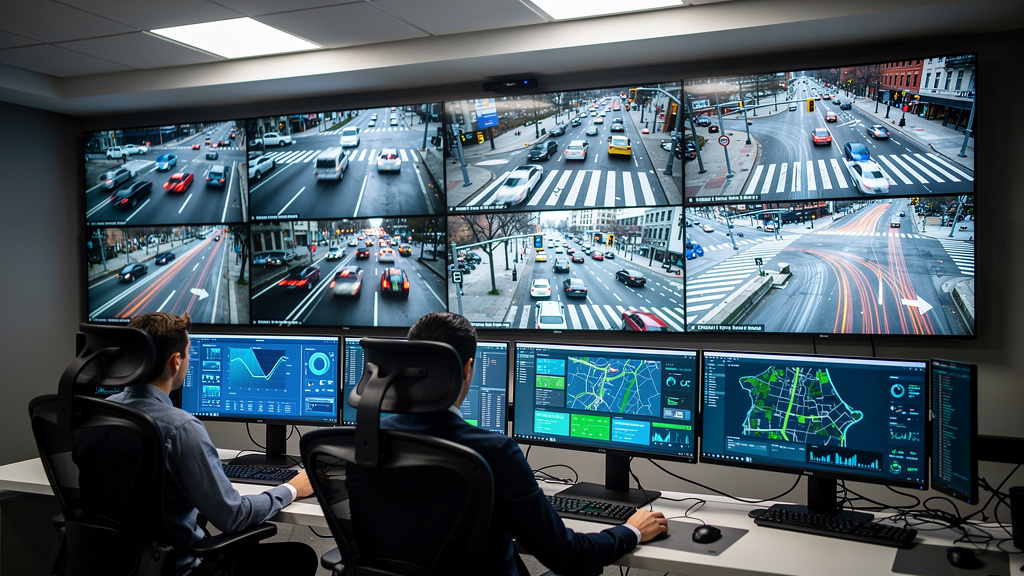
AI-based traffic management changes control rooms from watching and reacting to predicting and acting early. Instead of waiting for congestion to build and then flipping a few signals, systems study past patterns and current flows to make small, constant adjustments. Even minor time shifts at critical junctions can ripple through an entire network.
At the heart of this method sits data. Feeds from cameras, induction loops, connected cars, navigation apps, and weather services all flow into a single platform. Machine learning models look for patterns across time of day, special events, or sudden incidents. With this view, the system can smooth traffic before gridlock appears, cutting fuel waste and driver stress.
From Reactive to Predictive Control
Traditional traffic systems act like alarm clocks. They follow fixed plans based on old studies and change only by broad time-of-day rules. When demand changes due to a crash, a game, or a storm, those plans fall behind and delays build fast.
Predictive control driven by AI uses both history and live conditions to estimate traffic loads up to around an hour ahead. That window gives operators and automated systems time to:
- Adjust signal plans
- Reroute flows
- Give priority to buses and emergency vehicles
Because machine learning models search through far more data than any human could, they spot subtle links, such as how a minor incident on one road will affect a different corridor twenty minutes later. The result is not perfect traffic, but it is noticeably smoother and more stable.
Real-World Implementation Success Stories
We already see clear proof that AI in transportation works in real cities. In Pittsburgh, adaptive traffic lights guided by AI cut average travel times by about 25 percent and reduced vehicle emissions by roughly 20 percent. Those gains came from constant tuning of green times based on live counts instead of static plans.
In York in the United Kingdom, a citywide real-time transport model built with tools like PTV Optima gives managers a continuous view of road conditions. The system blends data from sensors, cameras, and connected vehicles to forecast network states up to an hour in advance.
With that forecast, York can test different signal strategies in software before using them on the street and then push updated plans that match the expected load. Less idling means lower fuel use, better air quality, and shorter response times for ambulances and buses. For city leaders, these wins translate into measurable return on past infrastructure investments and higher public satisfaction.
A saying often heard among traffic engineers is, “Small timing changes at the right junction can feel bigger than building a new road.”
Key Capabilities of Intelligent Traffic Systems in AI Transportation
Modern AI traffic platforms share several core abilities that set them apart from older systems:
- Adaptive signal control: Watches queues and arrivals in real time and adjusts cycle lengths and offsets to match them. That alone can smooth flow at busy intersections and cut harsh stop-and-go patterns.
- Vehicle priority: Lets buses, trams, and emergency units hit a wave of green signals along key routes, which improves schedule reliability and trims response time. Safety also gains because emergency vehicles spend less time weaving through stopped traffic.
- Support for walking and cycling: Systems can recognize heavy pedestrian presence and lengthen crossing times or adjust phases near schools and senior centers.
- Integration with navigation apps: Links with apps such as Google Maps and Waze allow city systems and drivers to share insight, so route guidance already factors in current signal patterns and incidents.
Reshaping Public Transportation with AI in Transportation Analytics
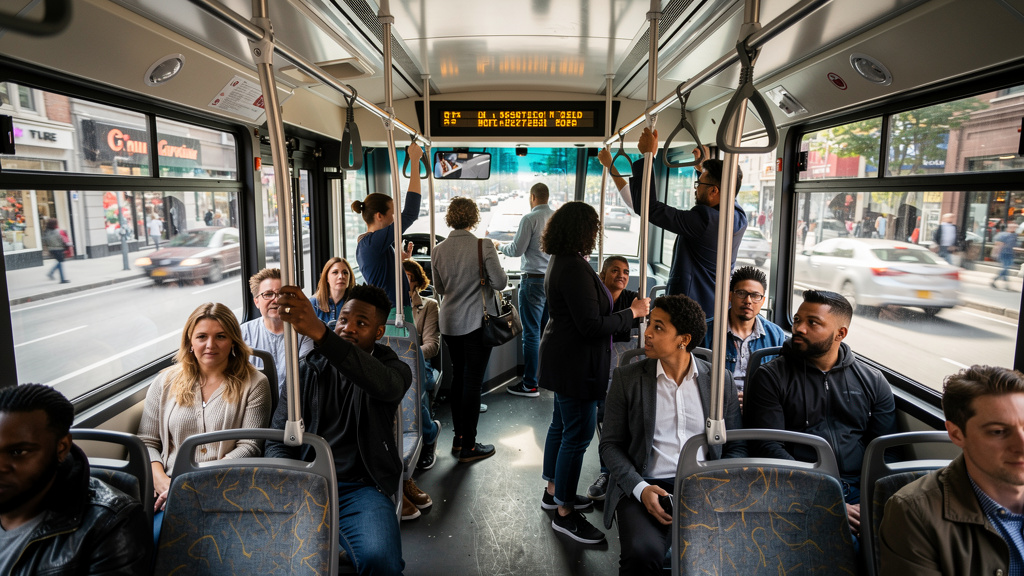
Public transit agencies are under pressure to do more with tight budgets while riders expect accurate arrival times and smoother trips. AI in public transportation helps agencies shift from fixed schedules based on out-of-date studies to flexible service that responds to actual demand.
By feeding years of ticket data, GPS traces, and ridership counts into machine learning models, planners gain a clearer picture of when and where people actually travel, though studies like Exploring bus drivers’ intentions remind us that driver adoption and behavioral factors remain critical to successful implementation. That picture then shapes everything from bus frequency to staff schedules. At the same time, riders see better real-time information on their phones and at stops.
Operational Efficiency Through Predictive Analytics
When we apply predictive analytics to transit data, patterns appear that simple reports miss. Models learn weekday and weekend habits, seasonal shifts, and demand spikes near venues or campuses. With that knowledge, agencies can:
- Send more buses where and when they are most needed
- Reduce nearly empty runs on low-demand routes
- Match crew assignments and vehicle use to expected loads
Better demand forecasts also support smarter crew and vehicle scheduling. Instead of overstaffing to keep buffers, agencies can match assignments to expected loads, which cuts overtime and idle time. Fuel use drops because fewer vehicles run with too few passengers.
On the rider side, real-time passenger information systems driven by these same models give more accurate arrival times and alert people to delays or reroutes. All of this feeds into core business goals like cost control, service quality, and customer satisfaction, without always needing new vehicles.
Innovative Applications in Transit Planning
Beyond daily operations, AI in transportation reshapes how agencies plan the next version of their networks. In San Antonio, researchers have used large language models with data formats like GTFS to test route changes, check timetable logic, and even produce human-readable suggestions for planners.
London’s Underground uses AI-powered smart ticketing systems to study anonymous travel patterns and test fare structures that spread demand more evenly through the day. That insight feeds into both pricing and station upgrades.
In Hamburg, the #transmove project applies agent-based models and machine learning to forecast future mobility needs across the city. This approach supports on-demand buses and shared shuttles that change routes as requests appear. These ideas help public transport stay competitive with private cars by making service feel more flexible and responsive without losing the efficiency of shared rides.
The Rise of Autonomous Vehicles: AI in Transportation’s Most Ambitious Application
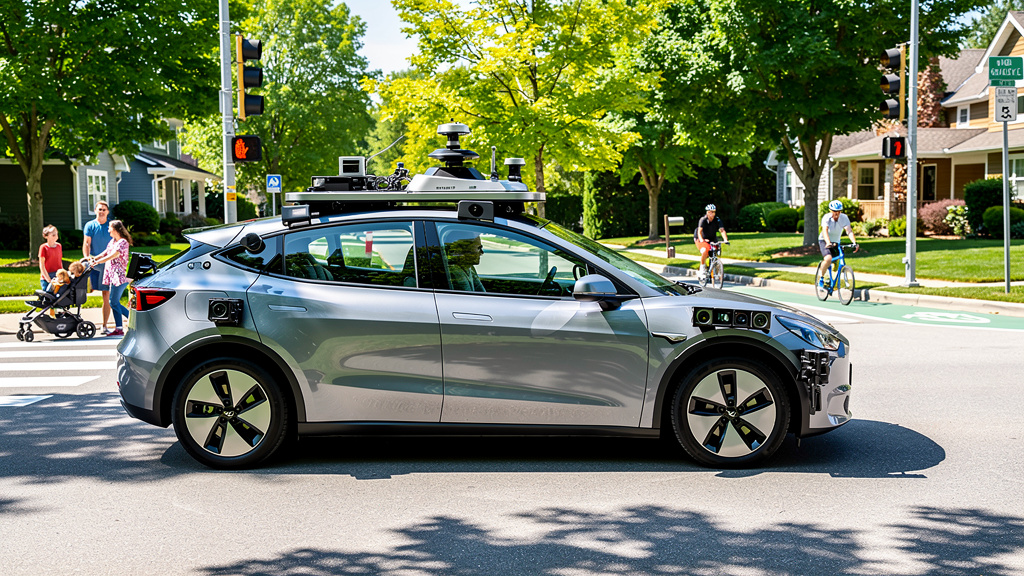
Among all uses of AI in transportation, autonomous vehicles attract the most attention and the deepest technical challenges. A self-driving car or truck must see the road, understand context, predict what others will do, and act safely, all within fractions of a second—challenges explored in depth by research on (PDF) Applications of Artificial Intelligence in Transport.
To reach that standard, developers build layered AI systems around rich sensor sets and powerful onboard computers. At the same time, they use enormous amounts of real and simulated data to train and check these systems. Players like Tesla and Waymo follow different design choices, but they face the same safety and validation questions.
The AI Technology Stack Behind Autonomous Driving
The first layer of an autonomous vehicle is perception. LiDAR, cameras, and radar scan the surroundings to form a near real-time three-hundred-sixty-degree map. AI models then process those streams to spot and classify objects such as cars, trucks, bicycles, pedestrians, lane markings, and traffic signs.
On top of perception sits decision making. Machine learning models take in the current scene, predict the next moves of nearby road users, and choose a safe path. That could mean slowing down, changing lanes, or steering around an obstacle. Control systems then translate high-level plans into steering, throttle, and braking commands.
Sensor fusion plays a key role by blending data from cameras, LiDAR, and radar so that one weak signal does not cause a bad choice. For example, radar can still see vehicles in heavy rain when cameras struggle, while cameras read signs that radar cannot. Fleet data from many vehicles flows back to central servers, where new models are trained and then deployed, so the system improves as more miles are driven.
The Simulation Imperative for AV Development
Validating that an autonomous vehicle is safe enough for broad use cannot rely only on public road tests. Studies suggest that billions of miles would be needed to cover rare but dangerous edge cases, which would take far too long and put road users at risk.
High-detail simulation addresses this problem by moving much of the testing into virtual space. Tools such as PTV Vissim Automotive let developers build rich traffic scenes with cars, buses, cyclists, and pedestrians, plus weather effects and tricky road layouts. Models can then face thousands of rare events that might never appear in limited real driving.
Because simulations can run in parallel on large compute clusters, teams can test many scenarios at once instead of waiting for them to happen in the real world. This shift to early and heavy virtual testing lowers development cost, shortens time to market, and gives regulators clearer evidence about performance limits. For anyone assessing autonomous tech for freight, shuttles, or robotaxis, understanding how a vendor uses simulation is now a key part of due diligence.
Improving Road Safety Through AI in Transportation-Driven Systems
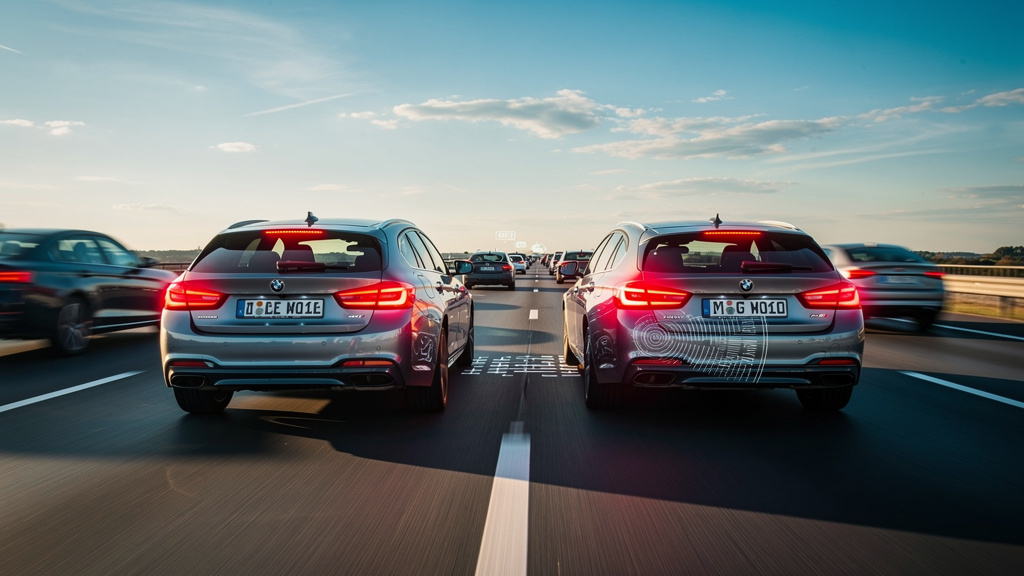
Road safety has long focused on better road design, stronger vehicles, and driver education, though recent research on AI-based prediction of traffic crash severity shows how predictive systems can now identify high-risk scenarios before incidents occur. AI in transportation safety adds a new layer by watching for risk in real time and stepping in before human error turns into a crash.
The change runs at two levels. Inside vehicles, advanced driver assistance systems act as electronic co-pilots. At the network level, AI-powered infrastructure watches traffic streams to catch and respond to dangerous events quickly. Together, these tools push safety from reactive crash response toward early risk reduction.
As safety researchers often say, “The safest crash is the one that never happens.”
Advanced Driver Assistance Systems (ADAS)
Modern ADAS features rely on cameras, radar, and AI models to monitor both the road and, in some cases, the driver. Key functions include:
- Lane departure warnings that watch lane markings and alert when the car drifts without a signal, which often points to distraction or fatigue.
- Automatic emergency braking that looks ahead for stopped or slow vehicles and can apply the brakes when a collision seems near and the driver is not reacting.
- Adaptive cruise control that maintains a safe following gap by adjusting speed on its own, easing stress in heavy traffic.
- Blind spot monitoring and rear cross-traffic alerts that warn of unseen vehicles during lane changes or backing out of parking spots.
- In higher-end systems, driver monitoring that looks for signs of drowsiness and issues alerts.
Studies show that cars with well-used ADAS features tend to see lower crash rates and less severe impacts when crashes do occur.
AI-Powered Infrastructure Safety Monitoring
Safety does not stop at the edge of the car. Many cities now run AI-based video analytics on traffic camera feeds to spot trouble within seconds. Models can recognize stopped vehicles on live lanes, sudden collisions, near misses at crossings, or patterns of speeding and aggressive lane changes.
When the system flags an event, alerts go to traffic control centers and emergency services without waiting for a phone call. Several European cities report that this cut response times by up to thirty percent, which can make a real difference in outcomes.
The same data also supports long-term safety planning. By studying where near misses and risky behavior happen most often, planners can redesign intersections or add measures such as lower dynamic speed limits near schools or busy crosswalks. For city managers, this data-driven view of risk supports smarter investment choices and can reduce legal exposure over time.
Driving Sustainability and Efficiency with AI in Transportation
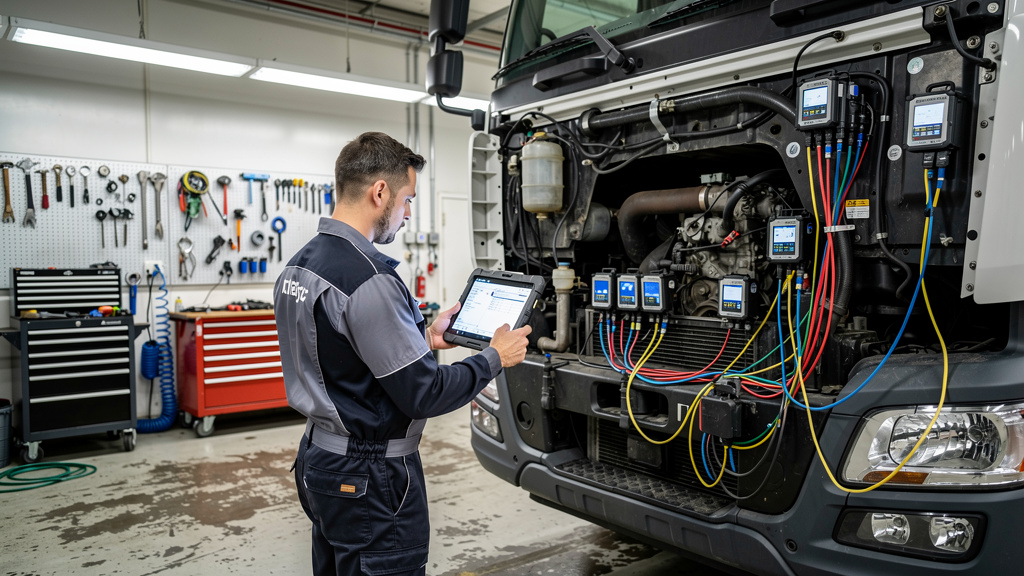
Transportation is a major source of fuel use and greenhouse gases, but many gains are still on the table. AI in transportation helps operators find those gains in two main ways. First, it shifts maintenance from reacting to breakdowns to predicting issues early. Second, it makes every mile cleaner through smarter routing and support for electric fleets.
These improvements matter both for climate targets and for basic business math. Less fuel burned and fewer unplanned repairs mean lower operating costs and more reliable service for customers.
Predictive Maintenance: From Reactive to Proactive
In a traditional fleet, parts get fixed when they fail or during time-based checkups, but modern approaches show How AI Agents Automate Load Securement Inspection and other compliance tasks to catch issues earlier in the maintenance cycle. That often means either too late, after a breakdown on the road, or too early, wasting part of the component life. AI-based predictive maintenance uses sensor feeds to strike a better balance.
Engines, brakes, tires, and other components now ship with built-in sensors or can be retrofitted with them. Machine learning models study vibration, temperature, pressure, and other signals to spot patterns that tend to appear before a failure. When the model sees those patterns, it flags the unit for service before it strands a driver.
Fleets that use this method report:
- Fewer roadside incidents
- Longer average vehicle life
- Lower total maintenance spend
In aviation, companies like Airbus and Boeing already use predictive models on aircraft data to schedule part replacements based on actual use and wear. For any operator running a large fleet, the return comes from reduced downtime, better asset use, and stronger safety records.
AI-Enabled Environmental Sustainability
AI in transportation also helps cut emissions by making every trip more efficient. Fleet management platforms can suggest routes that avoid congestion, steep climbs, and long idle stretches, which lowers fuel burn. They can also coach drivers toward smoother acceleration and braking patterns that save fuel without hurting schedule time.
On the infrastructure side, projects such as COMO in Essen show how traffic signals can be tuned not only for speed but also for air quality. By changing plans when air pollution nears certain levels, cities can keep hot spots from getting worse.
As electric vehicles grow, AI models will help predict where and when charging demand will peak. That insight guides smart placement of chargers and protects the power grid from overload. For both public bodies and private fleets, these tools support climate pledges, regulatory compliance, and day-to-day cost control.
Strategic Planning and Equitable Access in Modern Cities with AI in Transportation
Beyond real-time control, AI in transportation planning supports long-term questions about where to invest, which routes to add, and how to share mobility benefits fairly. Good planning needs a clear picture of how people move and who currently lacks good options.
Data from sensors, smart cards, mobile devices, and census records can feed AI models that build digital twins of city mobility. Planners then test ideas in this virtual city before pouring concrete or buying vehicles, which cuts the risk of costly mistakes.
Data-Driven Infrastructure Planning
With AI modeling, planners can simulate how a new rail line, bus corridor, or residential area will change travel patterns. By blending traffic sensors, transit data, and socio-demographic information, the model shows which routes will gain or lose riders and which roads may see more cars.
Work in cities like Berlin uses such tools to test policies like low-emission zones or parking limits and see how they affect both traffic volumes and trip choices. Machine learning can also forecast where jobs will cluster in the future and, therefore, where rush hour loads are likely to grow.
For agencies and city leaders, this kind of planning supports better return on public spending. Instead of relying mostly on static studies and public meetings, teams can combine community input with clear modeled outcomes and choose projects that align with climate and capacity goals.
AI for Mobility Equity and Inclusive Access
Fair access to transport is now a core part of urban policy. AI in transportation gives planners sharper tools to understand who is left out by current networks. By clustering areas with poor public transit links and matching that map with income, age, or health data, models reveal pockets of risk that might otherwise stay hidden.
Analysts can then test how a new bus line, on-demand shuttle, or bike share station would change access to jobs, schools, and clinics for specific groups. If a project mostly helps already well-served areas, planners can adjust plans before building.
This method supports environmental justice by showing in clear terms who gains and who does not. It also helps cities defend their choices when challenged, since they can point to both social goals and data-backed analysis.
Overcoming Implementation Challenges: The AI in Transportation Execution Gap
For all the progress in AI in transportation, many projects still stall at pilot stage. A review by the MIT Mobility Initiative and Kearney found that most efforts sit in isolated pockets instead of forming connected systems. That gap between promise and large-scale impact is often more about organization than math.
Three themes stand out:
- Fragmentation keeps data and systems from working together
- AI performance can be very strong in some tasks and weak in others
- Leaders must decide when to keep humans in the loop and when that might hurt more than help
The Fragmentation Challenge
The study from MIT and Kearney shows that many cities and firms test AI in transportation one use case at a time. A traffic unit may run an adaptive signal pilot while a fleet unit tests predictive maintenance and a planning unit experiments with demand models, all on separate platforms.
When systems stay siloed, it is hard to share data, prove full network benefits, or build a clear business case for wider deployment. True value appears when traffic control, fleets, and planning tools work from shared data and support each other’s decisions.
From an enterprise IT view, this means that integration, common data models, and interoperability matter as much as model accuracy. Without them, leaders face rising technical debt and struggle to show a combined return on investment.
The Jagged Frontier of AI Capabilities
Experts often describe AI performance as a jagged frontier. In some tasks, such as image recognition or narrow prediction problems, models can beat humans by wide margins. In other tasks that look similar on the surface, they may fail in odd or hard-to-predict ways.
In safety-critical settings like traffic control or autonomous driving, that uneven profile carries real risk. Operators must know where AI can be trusted with full control and where it still needs backup checks.
This has direct impact on risk management, insurance, and regulation. Clear testing regimes and transparent performance metrics are key so that both the public and oversight bodies understand what the systems can and cannot do.
Strategic Human-AI Pairing
Adding human oversight sounds safe, but it is not always a clear win. In some setups, a human monitor can step in when AI reaches its limits and catch rare failures. In others, splitting attention between many semi-automated systems can lead to slower reactions and reduced reliability.
Finding the right balance requires careful testing, clear procedures, and realistic human factors design. Operators and regulators need to treat this as a core design choice, not an afterthought. The right pairing will differ between, say, freeway control centers and warehouse yard trucks.
The Collaboration Imperative
No single agency or company can solve these issues alone. Shared data infrastructure, open standards, and clear governance rules help keep projects from becoming a patchwork of incompatible systems.
A phrase common in public-sector innovation circles sums it up: “Pilot projects are easy; scaling them is hard.”
Governments, private mobility operators, and technology vendors need aligned aims around safety, privacy, and long-term impact. Without that, regions risk building isolated AI futures that are hard to connect later. The next wave of gains from AI in transportation will come less from new algorithms and more from this kind of joined-up execution.
How VibeAutomateAI Helps You Navigate the AI Transportation Revolution
When professionals look at AI in transportation, the hardest part is often not the math but the maze of terms, tools, and vendors. It is easy to feel stuck between glossy promises and dense technical papers. At VibeAutomateAI, we focus on closing that gap.
We create practical guides and step-by-step tutorials that explain AI and machine learning in clear language, then show how those ideas map to real projects such as intelligent traffic control, fleet analytics, and smart infrastructure. Our goal is to help readers connect high-level strategy to concrete design and rollout choices.
We also track wider enterprise technology trends, from autonomous systems to AI-assisted planning, so decision makers can see how transportation fits within their broader IT and automation roadmap. For teams that care about security and governance, we cover topics like data privacy, bias, and accountability, which are especially sensitive when AI systems affect public safety.
By using our content, leaders can:
- Build stronger business cases for AI projects
- Ask sharper questions of vendors and partners
- Design initiatives that link clearly to outcomes like fewer crashes, lower fuel spend, or better access
We invite anyone working in or around transportation to explore our resources and turn AI from a buzzword into a strategic advantage.
Conclusion on AI in Transportation
AI in transportation is already reshaping how people and goods move, from smarter traffic lights and data-driven public transit to semi-autonomous vehicles, predictive maintenance, and long-term planning tools. Real projects show sharp gains such as around twenty-five percent lower travel times, twenty percent fewer emissions in some corridors, and emergency response that arrives about thirty percent faster.
At the same time, the limits of current deployments are clear. Fragmented pilots, the jagged frontier of AI performance, and missing common standards keep many efforts from reaching full scale. Success now depends on informed choices by professionals who understand both the power and the limits of these systems.
For technology leaders, that means judging use cases, building shared data foundations, and designing human roles with care. It also means staying realistic about risk and return. At VibeAutomateAI, we aim to give readers the knowledge and structure they need to make those choices with confidence.
The next phase of intelligent mobility will be shaped by the people who can connect AI tools to real problems in safety, efficiency, and access. With clear guidance and careful planning, there is a strong chance to build transport systems that are safer, cleaner, and fairer than anything we have seen before.
FAQs
Question: What Are the Main Benefits of AI in Transportation?
AI in transportation brings several clear gains across safety, efficiency, and access. It cuts crashes by reducing the impact of human error, which drives most road incidents. Smarter traffic control and routing shorten travel times, sometimes by around one quarter, and lower fuel use. Emission reductions of about twenty percent appear in some projects as idling falls. Fleets see cost savings through predictive maintenance and route optimization, while cities use AI to spot and fix gaps in access for underserved communities.
Question: How Safe Are Autonomous Vehicles Compared to Human Drivers?
Fully autonomous vehicles are still under development and tests, so direct comparison to human drivers is not yet final. The goal is to beat human safety by removing the ninety percent of crashes linked to human error such as distraction or fatigue. To reach that goal, developers run both real-world testing and huge amounts of simulated miles to cover rare edge cases. Current semi-autonomous features like ADAS already show measurable drops in crash frequency and severity. Long-term safety will depend on ongoing testing, clear rules, and steady improvement of both software and hardware.
Question: What Is the Biggest Challenge to Implementing AI in Transportation Systems?
The largest hurdle is the execution gap between promising pilots and full-scale, integrated systems. Many projects live in silos without shared data or common standards, which blocks wider benefits. The jagged frontier of AI performance also creates risk, since systems may excel in some tasks yet fail in others. Progress calls for shared data infrastructure, interoperable platforms, and strong governance. Organizations must also handle change management, show clear returns to stakeholders, and build internal AI skills to support long-term use.
Question: How Can Businesses Start Implementing AI in Their Transportation or Logistics Operations?
The best starting point is to pick a few clear use cases that tie to business aims, such as route planning, fuel savings, or predictive maintenance. From there, teams should:
- Review whether they have clean, consistent data and the right tools to collect and store it.
- Launch small pilot projects that test one or two use cases and track measurable results.
- Build AI skills through training, hiring, or work with trusted partners, using resources from VibeAutomateAI to guide design choices and good practices.
- Set rules for data privacy, fairness, and transparency so that new systems align with both policy and public expectations.
By moving step by step, businesses can reduce risk while still gaining the operational benefits of AI in transportation.
Read more about The Ultimate Guide to Keyword Research Tools You Need Now
[…] Read more about AI in Transportation: What Smart Cities Must See & Need Now […]