
Introduction
Choosing between n8n Cloud vs self hosted feels a lot like picking between renting an apartment and buying a house. Both give you a place to live, but the trade‑offs around control, responsibility, and long‑term cost are very different. The same is true when teams start asking which n8n deployment model fits their automation plans.
As more teams adopt n8n to replace or complement tools like Zapier and Make, that first decision about cloud versus self‑hosted becomes the choice that shapes everything that follows. It affects where data lives, how fast new workflows go live, who handles security, and how far you can push custom integrations and AI. So this is not just a technical preference. It is a strategic decision that touches security, compliance, budgets, and how flexible your automation stack will be in a year or two.
At VibeAutomateAI, we work inside this decision space every day. We help digital marketers, IT leaders, DevOps engineers, and operators cut through the noise and pick the n8n setup that actually fits their goals. In this guide, we walk through seven key factors that decide whether n8n Cloud or self‑hosted n8n is the better fit. By the end, you will have a clear, practical framework so the choice feels simple, not stressful, and you know exactly what to do next.
Key Takeaways for n8n Cloud vs Self Hosted
- The choice between n8n Cloud vs self hosted comes down to trade‑offs around control, customization, ease of setup and maintenance, and how much ownership you want over your automation infrastructure.
- Security, data privacy, and compliance needs often tip the scales, especially for healthcare, finance, HR, and any team handling sensitive customer data or strict data residency rules.
- Cost is more than the price tag on a plan, so it is important to compare n8n Cloud subscriptions against the total cost of hosting, maintaining, and securing your own instance.
- Technical skills, AI integration plans, and the need for enterprise features like SSO, environments, and Git also play major roles in which deployment model makes sense.
- With the right decision framework and guidance from VibeAutomateAI, teams can match their n8n deployment to their real priorities instead of guessing or overbuilding.
Factor 1: Control and Customization – n8n Cloud vs Self Hosted Ownership

When we talk about control in n8n Cloud vs Self-Hosted, we mean who decides where data is stored, how the system is configured, and what the architecture looks like. Your team retains ownership of data, credentials, logs, and workflow history within the infrastructure you manage.
This level of ownership is what makes self‑hosting so attractive for teams with strict policies, private APIs, or custom internal tools. You can:
- Add custom code nodes and community packages
- Expose n8n only on a VPN or private network
- Connect to systems that never touch the public internet
- Adjust system‑level settings that a hosted version will not expose
Your automation platform becomes another part of your internal architecture, not a black‑box service, and A Practical Evaluation of self hosted n8n confirms the viability of this approach for secure, scalable automation.
By contrast, n8n Cloud trades part of that freedom for convenience. The n8n team manages the servers, scaling, and updates. You stay focused on building workflows, not maintaining infrastructure. For many teams that rely mostly on public SaaS tools and standard integrations, that trade feels more than fair.
A simple rule we use at VibeAutomateAI is this: the more proprietary your stack and compliance needs, the more self‑hosting starts to look like a strategic asset instead of just extra work.
When n8n Cloud vs Self Hosted Control Becomes a Competitive Advantage
In real situations, the control highlighted in n8n Cloud vs Self-Hosted isn’t just about security—it can become a direct business advantage.
Consider:
- Analytics and data platforms that run private data pipelines and cannot send raw data through any external platform. A self‑hosted n8n instance running next to that pipeline can automate processes without letting data leave the company’s security perimeter.
- Product teams with a suite of internal tools and private APIs. With self‑hosting, n8n can sit deep inside that environment, talk to internal services, use custom nodes, and follow the same deployment patterns as the main app.
The same logic applies if you need custom behavior at the platform level, such as:
- Special logging and retention rules
- Custom network controls or IP allowlists
- Direct links to internal observability stacks
In these cases, the effort of self‑hosting is not just a cost. It is the reason the automation layer can match how the business works. For more standard workflows that connect well‑known SaaS tools, though, n8n Cloud will often be more than enough.
Factor 2: Ease of Setup – n8n Cloud vs Self Hosted Time to Value vs Long-Term Commitment
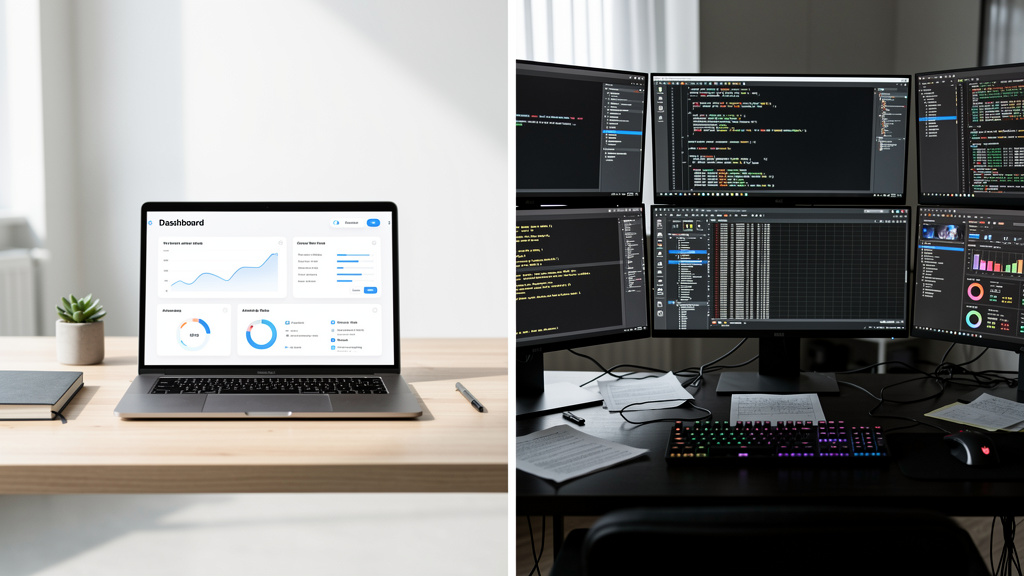
When teams compare n8n Cloud vs self hosted, they often feel the difference most clearly on day one. With n8n Cloud, someone signs up, confirms an email, and can build workflows in minutes. There is no server to provision, nothing to secure, and no Docker configuration to debug. For marketing and operations teams under pressure to deliver quick wins, that fast path matters.
Self‑hosting tells a different story. Even with good documentation, your team needs to:
- Pick infrastructure (cloud provider or on‑prem)
- Set up a database
- Configure Docker or another runtime
- Handle SSL and domain settings
- Think about backup and monitoring from the start
None of this is impossible, especially for experienced DevOps staff, but it turns a same‑day experiment into a project that may take days to feel comfortable shipping to production.
Then there is the ongoing work. Once your self‑hosted instance is running, you become the update team, the security team, and the on‑call team. Every new n8n release, every operating system patch, and every performance spike is now your concern. With n8n Cloud, all of that fades into the background. The platform updates itself, scales itself, and stays online without needing your engineers on standby.
So the question we always ask customers at VibeAutomateAI is simple: Is your team ready to trade subscription dollars for staff time, or is that time better spent elsewhere?
“Simplicity is prerequisite for reliability.” — Edsger W. Dijkstra
Self‑hosting increases power, but it also increases moving parts.
The Hidden Maintenance Tax Of Self Hosting
The setup phase is only the beginning. The real cost of self‑hosting comes from the quiet, repeating tasks that keep the instance healthy. Someone needs to:
- Apply security patches and OS updates
- Keep Docker images and dependencies current
- Monitor CPU, memory, and database usage
- Review logs and error trends
- Test backups and restore procedures
Even on a stable system, that can add up to several hours every month, and far more during times of change or incident response.
Small oversights can have large effects:
- A missed patch might expose a known security issue.
- A forgotten backup configuration might leave you without workflow history after a failure.
- Unchecked database growth can slow or block workflow executions.
In contrast, n8n Cloud shifts that entire layer of work to the vendor. Your internal staff can focus on designing automations that drive revenue or reduce manual work instead of worrying about disk space and TLS settings. For small teams, startups, and marketing groups without dedicated DevOps, that difference alone can make cloud the obvious first step.
Factor 3: Security, Privacy & Compliance – n8n Cloud vs Self Hosted Data Location

For many organizations, security and compliance do more than influence the n8n cloud vs self hosted decision—they drive it. If your workflows involve patient records, financial transactions, HR data, or sensitive customer information, data residency cannot be an afterthought.
With self‑hosted n8n, your team controls exactly where data is stored and how it is protected. Credentials, workflow definitions, and execution logs all sit inside infrastructure you manage and secure. That makes it easier to align with frameworks like GDPR, HIPAA, or SOC 2, where you may have to prove:
- Where data lives
- Who can access it
- How long it is kept
You can keep n8n inside a private network, limit access through your own identity provider, and integrate it with your existing security monitoring tools.
The flip side is that self‑hosting puts all the security responsibility on your shoulders. Your team must harden servers, manage access controls, set up logging, and react quickly when new security issues appear. There is no vendor silently handling these tasks in the background.
n8n Cloud follows a different model. The n8n team manages the infrastructure, applies security patches, and handles encryption at rest and in transit. For many businesses that do not deal with highly sensitive data, this shared‑responsibility model feels safer than trying to run everything in‑house. The trade‑off is that your workflow data and credentials live on n8n’s servers. If your legal or contractual obligations say certain data must never leave infrastructure you control, then self‑hosting stops being a preference and becomes a requirement.
Understanding Your Compliance Requirements
Before locking in a deployment choice in n8n cloud vs self hosted based on security, it helps to be clear about your real obligations.
- Map the data types.
Will you send personal health information, payment details, or government ID numbers, or are you mostly automating marketing tasks around leads and campaigns? - Check your regulatory environment.
Are you formally under GDPR, HIPAA, PCI, or similar rules, or is the concern more about company policy and customer expectations? - Review contracts with key clients.
Large customers may include clauses about hosting, sub‑processors, and data residency that matter here even if no law is directly involved.
Many teams discover that they prefer to keep data internal but are not legally required to do so. In those cases, n8n Cloud may still be safe and reasonable, especially for non‑sensitive workflows. For others, the rules are strict, and self‑hosting is the only path that fits.
At VibeAutomateAI, we always suggest looping in legal and compliance partners early. The goal is to match your n8n deployment to your actual risk profile, not to the most restrictive option by default or to a casual guess.
Factor 4: Cost Structure – n8n Cloud vs Self Hosted Fees and TCO

It is tempting to think, “Self‑hosted n8n is free, so it must be cheaper than n8n Cloud.” That view skips most of the real costs. Yes, the community edition of n8n has no license fee, but cost and price are not the same thing. When we compare n8n Cloud vs self hosted with customers, we always look at the total cost of ownership, not just the billing page.
With n8n Cloud, the model is straightforward:
- You pay a monthly or yearly subscription.
- Pricing usually scales with workflow executions or plan tiers.
- That fee includes servers, storage, maintenance, updates, and platform support.
For finance teams, this is easy to budget, and for smaller companies, there are no surprise infrastructure bills.
Self‑hosting changes the picture. You take on:
- Cloud or hardware costs
- Storage and bandwidth
- Monitoring, alerting, and backup tools
- Internal time for installation, maintenance, and troubleshooting
Even if those people are already on staff, their time has value. If a DevOps engineer spends five to ten hours a month on n8n, that time is not available for product features or other internal platforms.
There is a point where self‑hosting can win on cost. High‑volume, always‑on workflows can become expensive on usage‑based cloud plans. If you already have strong DevOps capacity and a tuned infrastructure stack, running n8n on your own servers can bring the per‑execution cost down. For many small and mid‑sized teams, though, once you factor in staff time, n8n Cloud often comes out ahead or at least very competitive.
Calculating Your True Cost Of Ownership
A simple framework helps make this less abstract:
- Estimate usage.
Roughly forecast monthly workflow executions and data volume based on current tools and processes. - Price n8n Cloud.
Map that usage to n8n Cloud plans so you have a realistic subscription number, not just the lowest tier on the pricing page. - Cost out self‑hosting.
List the pieces you need:- VM or Kubernetes resources (AWS, Azure, Google Cloud, on‑prem, etc.)
- Storage and bandwidth
- Monitoring and backup services
- Add staff time.
Estimate engineer hours per month for setup, updates, monitoring, and incident response, and multiply by a reasonable hourly rate. - Include risk and downtime.
Consider the impact of potential outages if something goes wrong on a system you run yourself.
Many teams find that once their cloud subscription crosses a certain level and they already have strong DevOps capacity, self‑hosting can save money. For early‑stage companies and lean teams, we often see the opposite result. Paying for cloud and keeping engineers focused on core projects delivers far more value than shaving dollars off infrastructure bills.
Factor 5: Technical Requirements – n8n Cloud vs Self Hosted Team Expertise
n8n itself is approachable. Building flows with nodes, triggers, and APIs is easy for many technical marketers and operations teams. However, in n8n cloud vs self hosted, hosting yourself requires a very different skill set. Even the n8n team recommends self-hosting only for expert users or teams with strong IT and DevOps experience.
To run a stable self‑hosted instance, someone on your team needs real comfort with:
- Docker or another container tool
- Server administration and networking
- SSL and domain management
- Database tuning and backups
- Security hardening and access control
- Monitoring, logging, and performance debugging
If those skills are already in place because you run other internal platforms, adding n8n may be a natural step. If not, there is a learning curve that should not be ignored.
n8n Cloud removes almost all of that. The only technical knowledge you need is how to think through workflows and work with APIs and webhooks. That makes the platform accessible to marketing operations, QA, and business operations teams who might not have deep infrastructure support.
For organizations that struggle to hire or keep DevOps engineers, or that rely on a managed IT provider, cloud is often the safer, calmer choice.
The Skills Gap Reality Check
A quick self‑check can save months of frustration later. Ask:
- Do we already run other self‑hosted applications reliably?
- Do we have people who understand Docker logs and can set up alerts on CPU and memory?
- Is there any kind of on‑call or escalation process for important internal systems?
If the honest answers lean toward not really, n8n Cloud is almost always the smarter starting point. Warning signs include:
- Depending on one overworked engineer for everything
- Outsourcing all IT with little in‑house knowledge
- A history of outages on existing internal tools
Even teams with strong skills sometimes choose cloud so they can put their time into core products instead of yet another internal service.
A practical pattern we see at VibeAutomateAI is:
- Start with n8n Cloud.
- Prove the value of automation with a handful of impactful workflows.
- Move to self‑hosting later only when there is clear ROI and enough internal expertise.
That way, self‑hosting becomes a confident next step, not a stressful first experiment.
Factor 6: AI & LLM Integration – n8n Cloud vs Self Hosted APIs vs Private Models

AI is no longer a nice‑to‑have feature in automation. Many of the most useful workflows connect to language models for summarizing, classifying, validating, or reasoning over data. When teams compare n8n Cloud vs self hosted, they often care a lot about how each option handles AI integrations.
The good news: both deployment models can talk to leading AI services such as OpenAI, Google Gemini, Anthropic Claude, and Perplexity. n8n provides nodes and patterns that make it simple to send text to these models and work with responses in the rest of your flow. On n8n Cloud, this is especially smooth because the environment is already configured to talk to public APIs with secure handling of tokens and network calls.
Self‑hosting introduces a major advantage for teams working with private or custom AI models. Because the instance runs inside your own infrastructure, you can:
- Connect to internal LLM endpoints that are not exposed to the public internet
- Keep sensitive data inside your network during AI processing
- Use proprietary or fine‑tuned models that reflect your internal data
- Run open‑source LLMs you host yourself for high‑volume workloads
So the question becomes less “Can n8n do AI?” and more “Where do our AI models live, and what data do they need to see?” If you expect to stay mostly with public AI APIs, n8n Cloud will serve you very well. If your long‑term plan includes internal AI platforms, self‑hosted n8n becomes a better match.
Real-World AI Automation Scenarios – n8n Cloud vs Self Hosted
AI‑driven workflows make the trade‑offs very concrete.
- Healthcare provider triage.
A provider wants to analyze patient messages to sort support requests and detect urgent issues, similar to workflows that Automate Research Paper Collection for analyzing and categorizing medical literature. To respect medical privacy rules, that data should never leave tightly controlled systems. A self‑hosted n8n instance connected to a private LLM running inside the same network can carry out this work without sending data to external AI vendors. - Financial fraud analysis.
A financial services firm scans transaction data for signs of fraud using proprietary models tuned on sensitive internal data, implementing workflows similar to those that Parse & Analyze Research papers using advanced AI processing and secure database storage. An internal LLM paired with self‑hosted n8n lets them automate reviews without handing anything to a third party. - Marketing content and summarization.
A marketing team wants to draft emails or summarize research using public ChatGPT and Gemini APIs. The content is not highly sensitive, and the main goals are speed and convenience. n8n Cloud is more than enough in this case. - People analytics and HR.
An HR team runs sentiment checks on anonymized employee feedback. Privacy risks are low, and the team prefers not to manage infrastructure. Again, cloud works well.
Over time, as organizations invest more in custom AI models and start treating them as key intellectual property, we often see a shift toward self‑hosted automation tools. VibeAutomateAI helps teams plan for that future so they do not paint themselves into a corner with their first deployment choice.
“Automation applied to an efficient operation will magnify the efficiency. Automation applied to an inefficient operation will magnify the inefficiency.” — Bill Gates
Where AI runs is just as important as how you use it.
Factor 7: Feature Availability – n8n Cloud vs Self Hosted Enterprise Capabilities
Another source of confusion when people compare n8n Cloud vs self hosted is the idea that the free self‑hosted community edition is a “basic” version. Basic here does not mean weak. The core automation engine is the same. You still get:
- Access to standard nodes and integrations
- Unlimited workflows
- Unlimited executions (within the limits of your infrastructure)
- The ability to write custom code
The difference shows up in advanced, enterprise‑grade features. Paid n8n Cloud plans and the paid self‑hosted Enterprise edition add tools that matter more as teams grow, such as:
- Collaboration on workflows so multiple people can work safely in the same instance
- Search across past executions for debugging and audits
- Global variables that simplify reuse of common values across flows
Paid tiers also add features aimed squarely at larger organizations, for example:
- SSO with SAML or LDAP
- Log streaming to external observability tools
- Support for separate development, staging, and production environments
- Git‑based version control for workflows
- Options, depending on plan, to integrate more tightly with external secret‑management setups
None of these are required to get value from n8n, but they become important once you reach a certain size and maturity.
So the real question is not “Is community self‑hosting good enough?” but “Do we need these enterprise features right now?” For solo builders, small teams, and companies without strict governance practices, the free community edition is usually plenty. When you do need those advanced features, the choice becomes whether to buy a cloud plan or license the self‑hosted Enterprise tier.
When n8n Cloud vs Self Hosted Enterprise Features Become Non-Negotiable
There are clear signs that it is time to look at paid tiers, no matter which hosting model you prefer:
- Collaboration pressure.
Several team members need to change, test, and ship workflows together. Collaboration features and good access controls stop being nice extras and start to feel essential. - Centralized identity.
If your company already uses tools like Active Directory or Okta for everything else, security teams will expect SSO and consistent access control for automation as well. - Multiple environments.
If you maintain separate development, staging, and production systems for other apps, being able to mirror that pattern inside n8n reduces risk and confusion. - Audit and observability.
Requirements for detailed audit trails and real‑time security monitoring often mean streaming logs into an existing SIEM or observability stack. - Source control expectations.
Teams that already use GitOps for infrastructure will also expect version control for workflows.
As a rule of thumb we share at VibeAutomateAI: if three or more of these conditions apply, it is time to budget for paid tiers and weigh n8n Cloud Enterprise versus self‑hosted Enterprise on equal footing.
Conclusion
When we put all seven factors together, a clear picture forms.
Self‑hosted n8n gives the most control and flexibility. Your team decides where data lives, how the system is secured, and how deeply it connects to private infrastructure and AI models. In return, you take on the setup, maintenance, and on‑call responsibility that come with running any important internal service.
n8n Cloud moves in the opposite direction. It gives you a fast start, low operational overhead, and predictable subscription costs. The trade‑off is less ability to change system‑level behavior and the fact that your workflows and credentials live on someone else’s servers. For many companies, that is a fair trade. For highly regulated or deeply customized environments, it is not.
There is no single right answer in the n8n Cloud vs self hosted debate. The best choice is the one that matches your security needs, your budget, your technical skills, and your AI plans.
One practical path we often recommend at VibeAutomateAI is:
- Start where you can move fastest (often n8n Cloud).
- Prove value with real automations that save time or reduce risk.
- Revisit hosting as your needs grow and your internal capabilities change.
Whether you lean toward n8n cloud vs self hosted, our deep guides, comparisons, and implementation playbooks help you design, launch, and scale n8n to fit your business—without the headaches.
“Everything fails, all the time.” — Werner Vogels
Good architecture is about deciding where failure is acceptable and who carries the pager when it happens.
FAQs
Can I Migrate From n8n Cloud To Self Hosted Or Vice Versa Later?
Yes, moving between n8n Cloud and self‑hosted n8n is possible in both directions, but it is not a one‑click process.
- Workflows can be exported from one instance and imported into another, which covers your main automation logic.
- Credentials, environment variables, and settings usually need to be recreated or migrated more carefully.
- Execution history and logs are harder to move and are often left behind.
Most teams that migrate do so from cloud to self‑hosted as they grow and add internal expertise or new compliance needs. If you plan a move, budget time for careful testing and a period where both systems run in parallel. We suggest picking the model that fits your next 12–24 months, not just the next few weeks.
Does Self Hosted n8n Require A Specific Cloud Provider Or Can I Use Any Infrastructure?
Self‑hosted n8n is very flexible about where it runs. You can deploy it on:
- AWS
- Google Cloud
- Azure
- DigitalOcean
- Smaller cloud providers
- Your own on‑premises servers
The main technical requirement is being able to run Docker containers or install n8n using Node and npm with a suitable database.
The official n8n documentation includes guides for several popular platforms, but you are not locked into any vendor. This freedom is part of the appeal of self‑hosting for teams that already have cloud contracts, private data centers, or strong preferences about where workloads should live. At VibeAutomateAI, we often help teams match their n8n deployment to the infrastructure they already know best.
How Does n8n Cloud Handle Data Residency For International Organizations?
Data residency is a key question for companies that operate across regions. n8n Cloud runs in specific data centers, and those locations may change or grow over time, so the best source of truth is always the current n8n documentation and support team. They can confirm:
- Where your instance would run
- What regional options are available
- How data is stored and processed in each region
If you must keep data inside a certain country or region for legal or contractual reasons, self‑hosting gives you direct control. You simply deploy n8n in a data center that meets your residency needs.
Many organizations compare n8n Cloud’s geographic coverage with their compliance map, then decide whether cloud is acceptable or whether self‑hosting is required. VibeAutomateAI can help interpret those requirements so the choice lines up with both legal and technical realities.
What Happens To My Workflows If I Stop Paying For n8n Cloud?
If an n8n Cloud subscription ends or is not renewed, workflows stop running because your access to the hosted instance is suspended. The exact details around how long data is kept and what you can still access depend on n8n’s current policies, so it is wise to review those terms or ask support before making changes.
In most cases, you can:
- Export your workflows before canceling so you keep the logic
- Import those workflows into another n8n instance later, including a self‑hosted one
With self‑hosting, the picture is different. As long as you maintain your own infrastructure and keep the system running, your workflows continue to execute without being tied to a vendor subscription. Many teams factor this difference into their long‑term planning, and VibeAutomateAI helps map those trade‑offs to real business risks and priorities.
Read more about 50+ Must-Try n8n Use Cases With Proven Results and Examples
[…] 40 minutes ago 22 min read […]
[…] plan on n8n Cloud in the twenty to fifty dollar range often replaces self-hosted setups that cost one hundred fifty […]