

Introduction
Picture a small company dealing with two nightmares in the same week. One night, someone tries to break into the office. Two days later, a fake invoice scam sneaks past email filters and almost drains the bank account. At that point, a simple camera or a single security contract no longer feels like enough.
Risk is no longer just about locks on doors. It is a mix of physical threats, insider issues, and cyber attacks that hit staff, property, operations, and data at the same time. With hundreds of security service companies promising safety—a market the Security Services in the US industry reports tracks closely—it is hard to tell who can really protect a business and who only sells buzzwords.
Security has shifted from a guard at the front desk to smart programs that blend trained people, electronic systems, remote monitoring, and cybersecurity. Choose the wrong security service provider and weak points stay open, even if the contract looks strong on paper. Choose well and the right partner turns scattered tools into one clear protection plan that fits how a business actually works.
In this guide, we walk through how modern security service providers operate, what types of services they offer, and how to compare them in a practical way. We look at on‑site guards, cameras and access control, remote monitoring, mobile patrols, risk consulting, and cybersecurity. As VibeAutomateAI, we focus on giving step‑by‑step, real‑world advice so that leaders, IT teams, and owners can pick a security service that truly supports long‑term safety and growth.
Key Takeaways
- Modern protection works best when a security service company combines on‑site staff, electronic systems, and remote monitoring into one plan. This mix covers blind spots that a single tool or team would miss and makes it easier to adjust as threats and business needs change.
- Strong provider selection starts with clear checks on local knowledge, response speed, guard licensing, training standards, and how well the company uses technology. When we look closely at these areas, weak providers become easy to spot, and we avoid contracts that look cheap but fail when an incident happens.
- Different industries face very different risks, so a one‑size‑fits‑all security program rarely works well. A warehouse, a hospital, and a data center each need their own mix of controls, staff skills, and procedures.
- A structured, data‑based risk assessment helps match the right security service to a real threat profile. By mapping assets, likely attacks, and impact, we can see where to invest first and compare bids on more than just hourly rates.
- Physical guarding, mobile patrols, fire safety, risk management, and cybersecurity now connect tightly. Understanding this full range of security services helps us ask sharper questions and build protection that covers people, property, and data at the same time.
“Security is a process, not a product.”
— Bruce Schneier, security technologist
Understanding Modern Security Service Categories
When most people hear the term security service company, they still picture a guard in a lobby. That image is only one small slice of what these providers do now. Leading firms act more like full protection partners than single‑function vendors, combining people, technology, and advisory work into one ongoing program.
Modern security services fall into three main pillars, with Managed Security Services Provider (MSSP) models increasingly integrating these components:
- Physical presence – on‑site guards, mobile patrols, special event teams.
- Technology and monitoring – video surveillance, access control, alarms, and remote monitoring centers with analytics.
- Strategic risk management – fire safety, investigations, crisis planning, and cybersecurity.
Stronger providers link these pillars so they support each other instead of working in silos. A camera trigger can alert a remote agent, who speaks through audio at the site and calls a mobile patrol, while also logging data for later risk reviews. This moves security from a reactive stance, where teams only respond after a problem, to a more proactive model that spots patterns and blocks threats early.
It also matters to understand what the term security service means in context. In some cases, it refers to financial groups such as Security Service Federal Credit Union, which is a member‑owned banking institution rather than a guard company. When we research providers, we need to be clear that we are looking for a physical and cybersecurity service company, not a financial brand that happens to share the same words.
Once we see how these categories fit together, it becomes easier to map our own needs:
- A small office might start with a light mix of remote monitoring and occasional mobile patrols, then add on‑site guards as it grows.
- A larger campus might need the full range of security services from day one, including risk consulting and cyber coverage.
This scalable view, supported by comprehensive IT Asset and Network documentation practices, is the base for every smart selection decision we make later.
On-Site Security Services: The Human Element Of Protection
Even with all the cameras and smart software in the world, human presence still sits at the center of any strong security program. Uniformed, licensed guards do more than stand at doors. Their visible presence sends a clear signal that the site is watched and that rules matter, which discourages many problems before they start.
On‑site staff handle a wide range of daily tasks, such as:
- Greeting visitors, checking identification, printing badges, and answering basic questions.
- Watching entrance points while keeping an eye on who is coming through the door.
- Walking interior and exterior patrol routes, looking for hazards, and testing locks.
- Confirming that safety gear such as fire extinguishers and exit doors is ready to use.
- Monitoring camera walls or alarm consoles and acting as first responders when an alert goes off.
Licensing and training standards make a big difference in how well these security services work. Good providers follow state rules for background checks, then add deeper teaching on:
- Emergency response and first aid.
- De‑escalation and conflict management.
- Customer service.
- Use of radios, access control, and basic security technology.
- Clear, accurate incident reporting.
We want guards who can calm a heated argument, coordinate with police or fire crews, write clear reports, and still treat staff and visitors with respect.
On‑site programs also change shape depending on the setting:
- A corporate front desk might need soft skills and visitor management at the center of the post.
- A manufacturing plant may focus on patrols around loading docks and production lines.
- A construction site might need overnight guards who watch heavy equipment and control access through a single gate.
Security service companies that listen first and then match guard tasks to daily operations will fit far better than firms that send the same playbook to every site.
Temporary needs add another layer. Conferences, product launches, shareholder meetings, or campus events often call for short‑term guard teams who handle crowd control, check bags, and protect VIPs. In all these cases, the human factor remains key, because no camera can read body language, sense tension in a room, or make fast judgment calls as well as a trained officer can.
Technology-Driven Security: Electronic Systems And Remote Monitoring
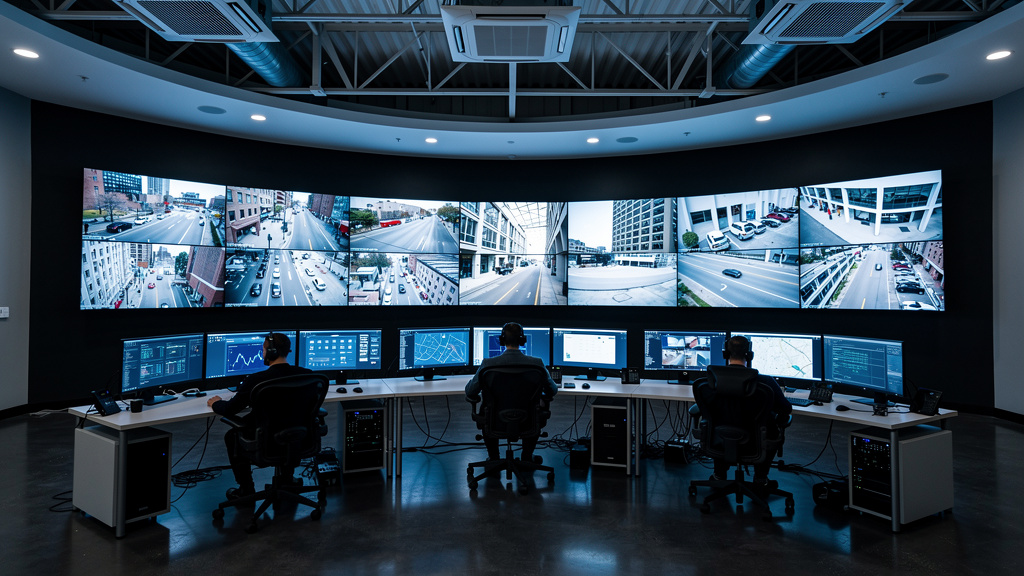
Technology has changed what a security service company can realistically cover. Ten guards walking a site cannot see everything at once, but a well‑designed camera, access control, and alarm system can give a full view of doors, gates, and sensitive rooms. When we pair that with skilled operators in a remote command center, we get reach and speed that simple patrols cannot match.
Core electronic tools include:
- Video surveillance.
- Door and gate access control.
- Intrusion alarms on windows, roofs, and restricted areas.
- Special tools such as weapons screening or visitor management kiosks.
On their own, these devices help, but real value comes when they work together. For example, if a card reader denies entry at a server room, that can trigger a nearby camera to focus in and send a clip to a remote monitoring agent.
Remote monitoring services turn passive cameras into active protection. In a typical setup, a security service provider runs a 24/7 center where trained staff watch live feeds from many sites. Analytics highlight unusual behavior, such as:
- Someone loitering near a fence at night.
- A truck entering through the exit lane.
- Movement in a closed area after hours.
The agent then checks the feed, speaks through a two‑way speaker to warn the person away, flashes lights, and calls a mobile patrol or local police if needed.
These same centers can run many special services:
- Remote perimeter protection using virtual lines and motion rules to spot intruders before they reach a building wall.
- Remote entry and exit control, where agents open gates for delivery drivers after checking identity on camera, even when no one is on site.
- Remote employee escort, where a worker leaving late at night calls in so a live agent watches them walk to their car on screen and stays ready to act if anything looks wrong.
Compared with guard‑only models, this blend of technology and remote staff often costs less for wider coverage. One agent can watch many more cameras than a single on‑site officer can physically patrol. At the same time, human verification cuts false alarms, which helps with faster and more accurate police response. The most effective security services do not replace people with machines; instead, they let people focus on higher‑judgment decisions while cameras and sensors handle routine watching.
Mobile Patrols And Rapid Response Capabilities

Not every property needs a full‑time guard, but very few sites are safe with no professional presence at all. That is where mobile patrol and rapid response services come in. These teams move between several locations in marked vehicles, giving a mix of visible deterrence and quick response at a lower cost than fixed posts.
Proactive patrols are one part of this model. Officers stop by on a set schedule or at random times to:
- Walk the grounds and check for suspicious activity.
- Test doors and windows.
- Watch for hazards such as leaks, broken glass, or lights left on.
- Handle opening the building in the morning and locking it at night.
Many companies also use mobile patrols to escort staff to cars after dark during busy seasons or special projects.
Response‑based security services form the second part. When an alarm trips at a store or office, a mobile unit can go to the site, check for signs of forced entry, and decide whether to call police or reset the system. The same applies when an employee uses a panic button. In a real emergency, these teams can help control access so that only first responders and key staff come in, which protects both people and evidence.
Speed matters a lot here. Strong providers build staffing plans so they can start service for a new site within one to three days when something urgent happens. This also extends to larger events such as storms, civil unrest, or long labor actions. Some security service companies run national contingency teams that can surge into an area, guard damaged sites, protect key stock, and support restart efforts.
For many small and mid‑sized businesses, mobile patrols strike a practical balance between cost and protection. There is enough presence to deter casual crime and to respond when systems alert, without paying for a guard to sit in a lobby that only sees a handful of visitors each day.
Specialized Security Services: Fire Safety, Risk Management, And Cybersecurity

Once the basics are in place, many organizations, particularly those requiring Government Security Services, face higher‑level risks that standard guarding cannot handle alone. Specialized security services fill this gap, covering fire safety, corporate risk, high‑level investigations, executive protection, and cybersecurity. These areas matter a lot for companies with sensitive data, regulated operations, or public‑facing leaders.
Fire safety services usually start with inspections and testing. Trained staff:
- Check sprinklers, alarms, extinguishers, and emergency lighting.
- Review layouts to spot blocked exits or stored materials that raise fire risk.
- Help design and run fire drills and evacuation plans.
In higher‑risk sites, on‑site fire and rescue teams can respond in the first minutes of an incident, help people evacuate, and use suppression gear before city fire crews arrive.
Risk management and investigation services go deeper into how an organization runs. Advisory teams map threats, business processes, and weak points across physical and digital areas. They may:
- Investigate fraud or theft of trade secrets.
- Review loss trends and insider risks.
- Work with leaders to close gaps and update policies.
Threat management groups track persons of concern and design safe plans for executives at public events or during tense times.
Cybersecurity now sits closely beside physical protection, with [Latest] Managed Security Services market projections showing rapid growth in integrated security models. A door reader and a login screen both control access, just in different spaces. Many security service providers partner with cyber firms or run their own teams that handle:
- 24/7 network monitoring.
- Endpoint protection on laptops and phones.
- Regular vulnerability checks.
- Incident response when a breach occurs.
The goal is to stop attackers from moving between digital and physical systems, such as stealing VPN credentials and then using them to unlock an office.
For companies with high‑value intellectual property, strict compliance rules, or visible leadership, these specialized services are not extras. They are part of the core protection mix. When we look at providers, it helps to ask not only what they do on the ground, but also what partners or internal experts they bring for these advanced needs.
“The more interconnected we are, the more points of entry attackers have. Physical and cyber security can’t be separated anymore.”
— Paraphrased from NIST security guidance
Industry-Specific Security Programs For Your Sector
A hospital, a retail mall, and a data center may all hire a security service company, yet their daily risks and rules look nothing alike. That is why generic programs rarely work well for long. The best providers design industry‑specific programs that match both threat types and how work actually flows on each site.
Examples include:
- High‑tech manufacturing and electronics
These sites need tight control of who can reach research labs, test gear, and design files. Security often centers on strong access control, visitor screening, and cameras over production lines and loading docks. Providers also help protect supply chains, tracking who handles parts from arrival to shipping. - Logistics hubs and distribution centers
Trucks arrive at all hours, many workers are contractors, and stock is easy to move. Good security focuses on gate control, yard and dock cameras, and clear badge rules for everyone. Random patrols and audits help catch patterns of loss early. - Office buildings and corporate campuses
Here, visitor management and staff safety are key. Front desk officers welcome guests while verifying identity and purpose. Guards and cameras watch parking areas, walkways, and shared spaces so that people feel safe working early or late. For large campuses, a mix of on‑site teams, mobile patrols, and remote monitoring gives wide coverage without heavy cost. - Data centers
These facilities sit at the heart of many businesses. Multi‑step access control with badges, biometrics, and escorts is standard. Providers often also support strict audit logging and compliance reporting for regulators and customers. - Healthcare facilities
Guards must be ready to de‑escalate tense family situations, watch controlled drug rooms, and support emergency codes. Security teams need to understand both patient privacy rules and the flow of clinical work. - Retail and commercial property
Loss prevention, shoplifting control, and a safe shopping or working atmosphere are top goals. Security must protect people and stock while keeping the space welcoming. - Construction projects
These sites change every week. Programs must adjust as new structures go up, with attention on perimeter control, material storage, and heavy equipment.
When a provider already understands the rules and rhythms of an industry, they can spot risks that outsiders miss. That is why sector experience should sit high on the checklist when comparing security service companies.
How To Choose The Right Security Service Provider: Essential Evaluation Criteria

Picking a security service company is not just another vendor choice, especially in a market where Market Share Analysis: Security services show significant consolidation and specialization trends. It shapes how safe people feel at work, how well property is guarded, and how quickly operations recover after a problem. A clear set of criteria helps us compare providers in a structured way instead of being swayed only by price or sales talk.
Key factors to review include:
- Local Expertise With Broader Backing
Look for managers and guards who know your city, crime patterns, and local rules, supported by a larger regional or national group. This mix brings both local insight and deeper training, technology options, and support during major events such as storms or large incidents. - Response Performance
Strong providers can start a new post within a few days when asked. They keep mobile patrols on the road around the clock and maintain clear targets for alarm response times. When talking to references, ask how fast guards and supervisors really showed up during real incidents. - Data‑Driven Planning
Good security starts with a formal risk assessment. Ask if they map assets, measure incident trends, and use analytics from cameras, access control, and cyber tools to adjust staffing and patrol routes. A provider that only reacts to calls without this type of review will fall behind both threats and business changes. - Licensing And Training
Every guard should meet state requirements and pass background checks. Beyond that, look for ongoing teaching in first aid, emergency drills, conflict de‑escalation, report writing, and use of security technology. Ask to see training plans, course topics, and any certifications. - Hybrid Program Design
The best security service providers combine on‑site guards, mobile patrols, electronic systems, and remote monitoring in one program. This lets them shift work between people and technology as risk and budget change, without starting over. - Scalability And Fit For Your Business
A good provider can support a single site now and then add more guards, more monitoring, or more locations as the business grows. They should be able to show clear examples of industry‑specific programs built for companies similar to yours. - Technology Stack And Integration Skills
Cameras, access control, alarms, and cyber tools do little if they do not share data. Ask how they integrate systems, what platforms they support, and how they stay current on new tools such as analytics and automated alerts.
When we gather proposals, it helps to request:
- A site visit.
- A written risk review.
- References from similar clients.
Instead of focusing only on the hourly guard rate, look at total cost of ownership, including avoided incidents, shorter downtime, and better staff safety. VibeAutomateAI was created to guide this kind of careful thinking, giving leaders practical checklists and frameworks for choosing a provider that fits both current and future needs.
Conclusion
Security has moved far beyond a simple guard at the door. Modern security service companies bring together people, cameras, sensors, remote centers, fire safety, risk consulting, and cybersecurity into one connected program. The partner we pick shapes how well we protect staff, property, operations, and data through both normal days and real crises.
The strongest protection plans mix human judgment with smart technology:
- On‑site officers read situations and handle people.
- Remote agents and electronic systems watch wide areas and react in seconds.
- Mobile patrols and contingency teams add reach when something sudden happens.
- Industry‑specific knowledge and specialized services keep high‑risk areas such as hospitals, data centers, and logistics hubs safe in ways that fit how they actually operate.
When we choose a security service provider, we gain the most by checking local insight, response capability, data‑based planning, guard training, hybrid program design, and the ability to grow with us. Careful due diligence, clear questions, and verified licensing and training give far better long‑term results than picking only on price or a glossy brochure.
At VibeAutomateAI, our goal is to make these decisions easier by turning complex security and technology topics into clear, workable steps. Use this guide as a framework when you talk with potential partners, compare proposals, and review site assessments. With the right security service in place, you can focus more on running your business, knowing that what matters most is protected with care and intention.
FAQs
Question 1: What Is The Difference Between On-Site Security Guards And Remote Monitoring Services?
On‑site security guards provide a physical presence, welcome visitors, watch entrances, and step in directly when something happens. They handle human interaction, from calming disputes to guiding evacuations. Remote monitoring teams work from a command center, watching camera and alarm feeds from many sites at once. The strongest programs use both, with guards on the ground and remote agents covering wide areas and off hours.
Question 2: How Quickly Can A Security Service Provider Deploy Personnel For Urgent Needs?
Top security service providers with strong local teams can usually place licensed guards on a new post within 24 to 72 hours. The exact timing depends on guard availability, site risk level, and any special training or clearances needed. When comparing companies, ask for real examples of urgent deployments and how they handled them from first call to guards on site.
Question 3: What Qualifications And Training Should Professional Security Guards Have?
Every professional guard should meet state licensing rules, which include background checks and basic instruction in legal topics. Strong security service companies then add regular training in:
- Emergency response and first aid.
- De‑escalation skills and conflict management.
- Report writing and evidence handling.
- Use of tools such as radios, cameras, and access control.
Many also teach soft skills so officers can balance enforcement with good customer service. During selection, ask to see proof of these training programs and any related certificates.
Question 4: Do I Need Industry-Specific Security Expertise, Or Will A General Security Company Work?
Industry‑specific expertise is very helpful because each sector faces its own main threats and rules. A security service that understands data center access rules, hospital patient safety, or logistics cargo theft can design better patrols, procedures, and technology setups. General providers may miss small but important details. When possible, ask for references from clients in your own field and check how long the provider has worked in that space.
Question 5: What Is A Hybrid Security Model, And Why Is It Considered An Effective Approach?
A hybrid security model combines several methods into one program. It mixes on‑site guards, mobile patrols, electronic systems such as cameras and access control, and remote monitoring by live agents. This approach lets a security service place people where human judgment matters most and use technology to watch wide areas and nights or weekends. The result is broader coverage, faster detection, fewer false alarms, and better value than relying only on guards or only on devices.
Stay connected